Showing posts with label literature. Show all posts

Tuesday, 29 July 2014

J. R. R. Tolkien: "The Two Towers" // Discussion

"The Company of the Ring is sundered. Frodo and Sam continue their journey alone down the great River Anduin - alone, that is, save for the mysterious creeping figure that follows wherever they go."

~CONTAINS SPOILERS and is likely to be much longer than my review of Fellowship, since I made a few more observations than previous~

Someone once told me (or I read somewhere) that the second book in a high-fantasy series is always a better read - at least, a more enjoyable read - than the first, because you won't need as much description of the surroundings; since you became familiar with them in the first book. With Lord of the Rings/The Two Towers, I quickly realised that less description is never the case. I'd put this down to the fact that the Company is always on the move, and never in the same place twice; therefore, description is always paramount and so, Two Towers requires just as much concentration and effort as Fellowship. Which is how it should be, I guess, although I'm longing to relax. In Fellowship you're still in awe of the new places and characters, so the slow-paced sections are significantly more tolerable, whereas I didn't find the new locations in TT as easy to connect with and as a consequence, were more hard-going.

Some people may argue that the action in Two Towers or, indeed, LotR as a whole, is periodical, and so, in the moments between the action, Tolkien provides you with plenty of time for easy reading. I wouldn't agree. Although a book wouldn't be a Tolkien novel without an amazing amount of description, I do find myself wishing he'd give it a rest sometimes - and let the plot do the work. Blasphemy, I know! Rather, I found my solace and comfort in the dialogue between characters. Sometimes it was hard to stifle an excited scream when I saw a speech mark because I simply long for those moments so badly - not that there's a sufficiency of speech, though, just because there's so much description and action. Speaking of action: the battle between Aragorn, Legolas, Gimli etc. against the Orcs near Mordor was, I found, not entirely spectacular to read. I didn't become especially involved with the war/fight scenes in this book, and decided that this is something I'd enjoy more on-screen. Some things though, I did enjoy. The opening of the novel with Boromir's death was brilliant - so unexpected, and the possibility of this 'opening the flood-gates' to future deaths within the Company was very intriguing.

Furthermore, it was also quite interesting to see which paths the characters took once the Company had been separated by fate. It was lucky that Legolas and Gimli ended up together as their bond seems to be growing and is interesting to 'watch'; as is the unfolding of Aragorn's destiny as heir of Elendil. I suppose a 'truce' between the Elves and Dwarves throughout Middle-Earth is somewhat of an inevitability further down the line, if I know Tolkien. Sadly, I found that I missed the Elves and Elvish locations of Fellowship, although I did really enjoy the addition of the Ents, who bore such a resemblance to the tree-giants of Bridge to Terabithia and hence were a huge source of nostalgia for me. One addition I didn't really appreciate so much was the brief mentioning of the Oliphaunts. Just by the name you're thinking 'elephant', and still will be once I quote Tolkien's description of them: "Grey as a mouse, big as a house, nose like a snake, I make the Earth shake, flapping big ears, beyond count of years... never lie on the ground, not even to die."  What you're describing, dear Tolkien, is an elephant - and whilst I appreciate that you're probably trying to suggest that Middle-Earth actually exists parallel to Earth with these mystical versions of actual creatures for the reader's enjoyment, I thought that the idea of the Oliphaunts was lacking in originality.

Unsurprisingly, Gandalf's character continued to annoy me throughout The Two Towers, although admittedly, most of my irritation sprang from what immediately followed his return - his first conversation with Aragorn, Legolas and Gimli. Quote: "Gandalf," the old man repeated, "Yes, that was the name. I was Gandalf." Are you really telling me that he came back from great peril or death with no idea of his own name, yet he was able to name those around him with no problem? He strode up to these people, knowing they were no danger to him, knowing they were his friends. It's not likely he'd forget his own name and remember them. Of course, it's all for dramatic effect but it didn't really work on me. I don't think I'll ever particularly like Gandalf, although I do have a soft spot for Gollum. I think Smeagol is such an interesting character and it was great to see more of him in this book! His betrayal of Frodo even seemed like a betrayal to me because I liked him so much.

At both the beginning and the ending of the book I was completely on the edge of my seat, but the conclusion was particularly spectacular. Tolkien is an evil genius! No one expects the man-eating spider, do they?? For a moment there, I really thought Frodo was gone, so when Samwise had to take the Ring and leave without him I was heartbroken! That said, I do have one itsy bitsy qualm with the ending (I know, I'm sorry). Quote: "Clang. The gate was shut. Sam hurled himself against the bolted brazen plates and fell senseless to the ground." Doesn't it sound like Sam intentionally ran into the gate and knocked himself out? Apparently, that's not what actually happened. He just ran toward the gate and fainted, or something. I thought the wording of that particular sentence was a bit ambiguous, which wouldn't normally be a problem but it's the last action we see in the book! So we should be clear on what's actually happened.

Overall, although the book at some points didn't move fast enough for my liking, and so my rating (which you'll find below) has significantly decreased since Fellowship, I did find myself wanting to read The Return of the King pretty swiftly after finishing The Two Towers, to see how Frodo and Sam fare. Lord of the Rings is always interesting. And in Tolkien's defence, he wasn't to know at the time of writing that LotR would be split into three stand-alone novels.

Disclaimer: At times I may make negative observations, but this is more likely to be because 1) I recognise that everything, however brilliant, has flaws or 2) I'm an English Literature student and have learned to write critically. I would like to reiterate that I absolutely love Tolkien's work, I'm a massive fan and hope, one day, to have read everything he's written.

Thanks for reading all the way through! To keep up with what I'm reading, please feel free to add me as a friend on Goodreads: http://www.goodreads.com/meaghanbethany

Also: Eowyn + Aragorn = ♥!! I ship those two so hard.

Rating: ★★★1/2 (the 1/2 was added for the spectacular ending)

ISBN: 0-261-10236-2

Monday, 21 July 2014

Susan Hill: "Dolly: A Ghost Story" // Review


"Orphan Edward Cayley is sent to spend the summer with his forbidding Aunt Kestrel at Iyot House, her decaying home deep in the damp, lonely fens. With him is his spoilt, spiteful cousin, Leonora. And when Leonora's birthday wish for a beautiful doll is thwarted, she unleashes a furious rage which haunts her quiet, subdued cousin for years afterwards. Much later, and now each other's only surviving relative, the cousins return to Iyot House. And it becomes horribly apparent that Leonora's act of violence has had dark and sinister consequences that they can neither anticipate nor escape."

I was given this book a couple of Christmases ago by my Grandpa and his wife, who both know a lot about English literature - my Grandpa being a teacher/examiner and Cheryl being a librarian. In fact, they bought me almost the entire Susan Hill collection, which I am immensely grateful for; not to mention that they all have such beautiful covers, especially Dolly. In case you don't know, Susan Hill also wrote The Woman In Black, which is probably why you're wondering where you've heard the name from.

~I'm going to be very unapologetic about spoilers in this review because I would love to discuss different parts of the plot which I cannot do without revealing something so if you don't want to know, please stop reading now.~ Hill has an absolutely genius mind. I wouldn't say that I was particularly terrified by this book, although it was atmospheric and sort of freaky. The settings of Iyot House and, even more so, the church cemetery nearby were of course, extremely creepy and very reminiscent of the Eel Marsh House setting in The Woman In Black. The character of Leonora scared me half to death at first while I got used to her, and I didn't particularly like Ms Mullen, though I don't think you're supposed to.

The background information you're not given in the blurb is that Edward's mother (Dora) and Leonora's mother (Violet) who were Kestrel's much younger sisters, grew to hate each other. They looked very different, with Violet being the much prettier one, although Dora had a nicer personality. The two youngest sisters led very different lives, with Violet moving around from country to country, marrying then re-marrying, living a life of luxury, while Dora stayed in Britain, marrying only once. They both had their children towards the end of their lives. From the start, there is never much hope for Edward and Violet seeing as hate is in their blood. Edward and Kestrel try their hardest to put up with Leonora, although in the end she is too much like her mother. (INTERJECTION! Not only is Leonora much like her mother, but Edward is much like his mother too. The lives they lead and the choices they make are parallel to their mothers' choices - which is something I was very interested in. It gives the story deeper roots. But more on that further down.)

The 'ghost' story begins when Leonora rejects the doll her Aunt Kestrel bought for her ninth birthday, and the doll's skull shatters across the floor. The doll is beyond repair, so Edward, after he thinks he hears it crying in its box, buries it in the graveyard hoping it will find peace - only for fate to bring the doll back many years later. When Aunt Kestrel dies, she demands that the doll be found and given back to Leonora, so that she may learn some manners and graciousness. However, when Edward digs the doll up forty years after it was buried, it shows signs of having aged like a human; wrinkles, a bald head, sunken eyes. The story doesn't end there. It soon becomes evident that Leonora's young daughter, Frederica, is suffering from an unknown 'disease', which ages her quickly - gives her a bald head and sunken eyes - just like the doll... and when Edward's daughter suffers the same fate, it is clear that the cousins are being punished for that fateful day in Iyot House when Leonora broke it.

Although it's described as a ghost story, I would argue against it. Contrary to my expectations, there were no ghostly apparitions in this book. The only source of the paranormal aspect was the doll, who did not set out to frighten or harm Edward or Leonora. The doll was not a ghost. I'd rather it had been given a different title, say, "Dolly: A Horror Story", just so it does what it says it does on the tin. It was an easy read, not hard to follow or fathom, but I did expect more from this plot. That said, I can't wait to move onto my other Susan Hill books.

Similarities between Edward/Leonora and their mothers:
1) Leonora is extremely beautiful, and lives a nomadic life of luxury
2) Edward is average-looking, like Dora, with a nice personality
3) Leonora gets divorced and marries several times
4) Edward marries only once
5) They both only have one child, at a relatively late age

Rating: ★★☆☆☆
ISBN: 978-1846685743

Thanks for reading! Here's the link to my Goodreads page if you'd like to keep up with what I'm reading: www.goodreads.com/meaghanbethany

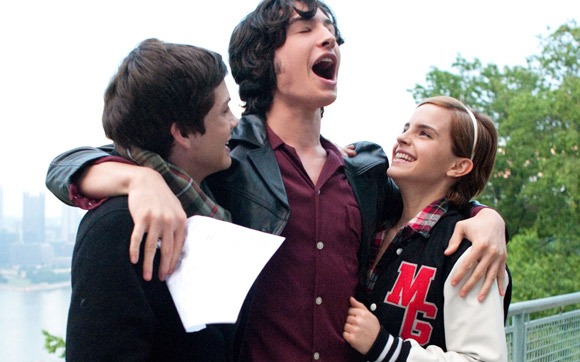
Stephen Chbosky: "The Perks Of Being A Wallflower" // Review


"Charlie is a freshman, and while he's not the biggest geek in the school, he is by no means popular. Shy, introspective, intelligent beyond his years yet socially awkward, he is a wallflower, caught between trying to live his life and trying to run from it. Charlie is attempting to navigate his way through uncharted territory: the world of first dates and mixed tapes, family dramas and new friends; the world of sex, drugs and The Rocky Horror Picture Show, where all one requires is that perfect song on that perfect drive to feel infinite. But Charlie can't stay on the sideline forever. Standing on the fringes of life offers a unique perspective. But there comes a time to see what it looks like from the dance floor. The Perks of Being a Wallflower is a deeply affecting coming-of-age story that will spirit you back to those wild and poignant roller-coaster days known as growing up."

 Many times I've seen this book compared to The Catcher In The Rye (you can read my review on that here if you don't mind how utterly damning it is), hell, it's even referenced on the front of my copy by USA Today, and I can understand why, although the only two things they really have in common are 1) a male protagonist and 2) an 'adventure' during their high-school years. In my opinion, Charlie is a much more likeable character than Holden, so if you didn't like The Catcher In The Rye then don't be put off of reading Perks just because the two have been compared. Charlie is a wonderful narrative voice. He may be fifteen, but he seems younger; knowing next to nothing about friendships or how stimulating life can be. Naïve and unknowing as he may be, Charlie is also innocent, mature, humble, caring and accepting, all at the same time.

This bildungsroman novel comes as Chbosky's first, which he began some time after he studied Filmic Writing in University. Through the use of letters to tell the story, which is otherwise known as an epistolary, Chbosky utilises his filmic knowledge well. The pacing is fast in some places and slow in others, depending on what and how much is happening - very much resembling a climax or an increase/decrease in tension as in a movie. It can also be quite philosophical in places, especially when Charlie comes across people who are different to him and must come to a conclusion about them. Through Charlie's experience with these people, this book tackles a number of taboo subjects, such as: domestic abuse, child abuse, alcohol abuse, rape, homosexuality, abortion and infidelity - but all in a manner in which it doesn't depress you. Sure, you may be sad for a few seconds but luckily Charlie dwells on nothing for long (apart from one revelation which is kept secret, even from himself, until the end). But, I can tell you now that Charlie reserves all judgement when it comes to the life choices of others, which is probably my favourite thing about his character.

I didn't find anything cheesy about this novel - okay, maybe sticking their heads out of the car roof in the tunnel was a bit cliché - but otherwise, the characters were all very real and make very separate impacts on the reader. His best friends, Sam and Patrick, were just as loveable as Charlie, despite their struggles. I have even heard that some people recommend this book to others when they're feeling depressed, because Charlie is so natural and relatable when problems arise that it helps them to cope. I think that's amazing.

Rating: ★★★1/2
ISBN: 978-1-84739-407-1

Thanks for reading! Feel free to add me on Goodreads: www.goodreads.com/meaghanbethany

Lauren Oliver: "Delirium" // Review


"They say that the cure for love will make me happy and safe forever. And I've always believed them. Until now. Now everything has changed. Now, I'd rather be infected with love for the tiniest sliver of a second than live a hundred years suffocated by a lie. There was a time when love was the most important thing in the world. People would go to the end of the earth to find it. They would tell lies for it. Even kill for it. Then, at last, they found the cure."

I picked Delirium up on a trip to the library last week, after finding virtually nothing else in the fiction cabinet that I was interested in. A cure for love? Hell yeah, that's interesting. My love of dystopian novels is no secret.

Our narrator is a 17 year old girl called Magdalena, or Lena, who, like everyone else in Portland, America, must have the compulsory operation (which includes cutting out part of the brain) to rid herself of the deliria. The deliria is love in any sense, romantic or pure - the love you feel for your family as much as love for a partner. All love must be exterminated, as "the deadliest of all deadly things". 

Lena's operation is set for her 18th birthday, and at first she welcomes 'the cure'; as she hopes it will lessen the grief she feels at the thought of her mother's alleged suicide. Lena's dad is gone, too, having been taken by cancer prior to her mother's death. Lena's sister Rachel has already undergone the operation - has forgotten all about the tenderness of her first love, who she was torn from, and living an adequate yet emotionless life as the wife of another man. Lena herself will be matched to an appropriate suitor before long. But, as the preparations begin, Lena's best friend Hana starts acting strangely, starts getting into illegal activity such as mingling with boys and staying out past curfew. When Lena follows her to a party one day... will something or someone turn her against 'the cure'? And is the Government really protecting its people?

OH MY GOD, THIS BOOK. It was everything I wanted it to be. Alex was such a sweetheart! I cried so hard when he and Lena fell in love. I don't know why I cry at all the happy bits; I mean, I would have cried at the ending but I guess I was too disappointed to. What's amazing about this book is your emotions are manipulated to reflect the characters', in the end. It's both heartwarming and heartbreaking at all the right times. A rollercoaster ride of deceit, love, and loss. PICK IT UP. I cannot wait to read the next one in the series: Pandemonium.

Rating: ★★★★★

Thanks for taking the time to read! Feel free to add me on Goodreads: www.goodreads.com/meaghanbethany

Friday, 18 July 2014

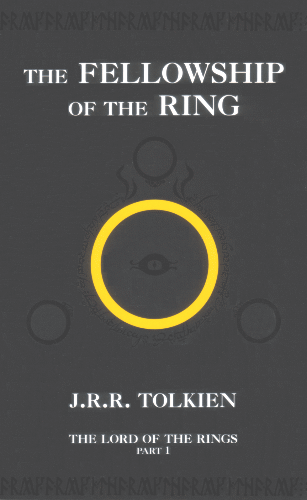
J. R. R. Tolkien: "The Fellowship of the Ring" // Discussion

~MAY CONTAIN SPOILERS~ It took me longer than I thought it would, but finally, I conquered all 531 pages of the first installment of the Lord of the Rings trilogy: The Fellowship of the Ring. I have heard it said that a fantasy fanatic reviewing Tolkien - a man widely thought of to be "The Father of Fantasy," - is the same as a Christian reviewing The Bible. I wholeheartedly agree with that statement, and so, this post will not be a review, but rather, a 'discussion' of sorts. Even if the discussion is with myself.

Not usually one for high-fantasy and hobbits, my purchase of Fellowship and The Two Towers was completely unexpected. I was in my town waiting for my dad to get back from the gym when I decided to have a lurk around the charity shops. I found these two books in one of my local Lighthouse stores and something came over me; my best friend Jayson is addicted to all things LOTR and so I think he may have rubbed off on me a little. Sadly, a copy of the third book, The Return of the King, wasn't available - but I figured I could pick that one up from the library, which I did the very next week. Anyway, at the time I had two great books with Tolkien's own illustrative designs on the cover, even if the copies themselves are a bit weathered. After all, they've been in circulation since 1999.


Even though I, myself, haven't seen the movies in 10 years and hadn't read any of the books before this week, I'm assuming that you, like me, have at least some understanding of the storyline. However, just in case you have been living under a rock for the best part of 100 years and have not yet stumbled upon even a synopsis of The Lord of The Rings, here is the blurb from Fellowship:

"In a sleepy village in the Shire, a young hobbit is entrusted with an immense task. He must make a perilous journey across Middle-earth to the Cracks of Doom, there to destroy the Ruling Ring of Power - the only thing that prevents the Dark Lord's evil dominion."

I did really, really enjoy Fellowship. Tolkien's wondrous, rich descriptions and poems were a blessing to read. I even found myself enjoying some of the songs. The hobbits were all so child-like and endearing, and I loved the characters of Aragorn, Bilbo and Legolas from the moment they made their appearances. I did have some qualms with Gandalf though, concerning the way he's just automatically in charge. In the entirety of Fellowship we do not see any transition from an ordinary guy/wizard to a man with such a position of superiority and power - if such a transition ever existed in any of Tolkien's writings - however I understand that in one of the following books there will be a lot more characterisation when he transforms into Gandalf the White. And at times, his superiority meant the plot was a little predictable. If Gandalf said the Company would suffer no disturbances that night then the reader would not worry about disturbances and there would be none; because when on Earth would Tolkien ever write Gandalf to be unwise? What Gandalf says goes.

Another plothole I found difficult to get over was the (just slightly) underdeveloped physicality of Sauron, The Lord of the Ring. I was surfing the internet one day, researching people's opinions about LOTR, when I came across someone who wondered why there was no description of Sauron in Fellowship. I pondered it for a moment in confusion, thought back, and realised that there really was no mention of his appearance at all. I brought it up with my friend Jayson - the one who's obsessed with all things LOTR, and he said, "There's no description of Sauron's body because he's just an eye." Needless to say, I responded, as any normal teenager would after just being given this information, with simply the word, "WHAT". Now, my problem with Sauron being just a headless, bodyless, eye is that, whilst the Company are going to great lengths to avoid the Ring falling back into Sauron's hands, the irony is that he has none. My first thought was of how he could possibly use the Ring to harness any dark power if he couldn't at least slip it onto his finger first. Then Jayson explained to me that, because Sauron created the Ring, he doesn't have to touch it to harness its power. But everyone else has to touch it to harness it, so I can't think of any good reason why it should be different for Sauron... even if he is the creator. The bad guy not being able to wield the weapon properly? Yeah, that was a downside for me. At this point, anyway.

Something I was happy to learn during my research is that Tolkien was good friends with C.S. Lewis, the author of The Chronicles of Narnia. I love the works of both of these two men and the fact that they knew each other and existed in the same time period is astounding to me. I learned that Tolkien, like Lewis, was a Catholic; which I could never have imagined. Then, it clicked. Frodo being led not into temptation (using the Ring) and delivering it from evil (Sauron and the Ringwraiths)? Totally Catholic. How could I have missed that?

Despite pointing out any seemingly negative observations, I assure you that I really do love LOTR and soon I'll be starting The Two Towers, which looks slightly less threatening in length. To keep up with what I'm reading, feel free to add me on Goodreads: http://www.goodreads.com/meaghanbethany. Thank you!

Rating: ★★★★1/2

Friday, 4 July 2014

Sean Platt & David W. Wright: "Monstrous" // E-Book Review

To my surprise, my dad recently bought me a Samsung Tab 3 which I am completely in love with. I found out that my device was eligible for a free e-book download every month if I activated a Samsung Kindle account, so I went for it. From a choice of four e-books that I'd never heard of or been recommended, I decided to download 'Monstrous' by Sean Platt/David W. Wright, which seemed the most "me". Of course, there was a supernatural element to it, but also a gothic element, which I thought would help me on my A2 English Literature course this  September... if I pass my exams.

The book is about a well-off comedian called Henry, who lives comfortably with his wife, Samantha, and their daughter Amèlie. One day their sizeable house is broken into, but it seems the only thing the attackers want is Henry's life, and his daughter's. Henry and Amèlie end up killed and in Purgatory, although separated, where Henry meets a man in white and a man in black. Instead of waiting for his judgement from God, the man in black - Boothe - persuades Henry to go back to the Earth plane as one of the undead, to seek revenge on his (and Amèlie's) killer. However, Henry is turned into a monster who feeds from violence and sorrow.

I didn't really connect with this book. Henry was just so easily persuaded by Boothe and Randall (the men in white and black), forever jostling with his alliance to one or the the other, that by the end it was completely unconvincing. Noone can be that indecisive. Also, there were a lot of profanities, which wouldn't normally bother me, but there were so many that it just seemed forced and cheesy. One thing I did like about the book was that for a long while I was never really sure about who was the bad guy out of Randall and Boothe. There's a massive plot twist at the end of the book, which I also liked, even though it was sad enough to be sickening.

To keep up with what I'm reading, visit my Goodreads page here: www.goodreads.com/meaghanbethany

Tuesday, 24 June 2014

Tim Weaver: "Vanished" (David Raker #3) // Review

"For millions of Londoners, the morning of 16th December is just like any other. But not for Sam Wren. An hour after leaving home, he gets on to a Tube train - and never gets off again. No eyewitnesses. No trace of him on security cameras. Six months later, he's still missing. Sam's wife hires David Raker to track him down, but in this case the secrets go deeper than anyone imagined. For, as Raker starts to suspect that even the police are lying to him, someone is watching."

Vanished, the third book in Tim Weaver's David Raker series, was given to me one Christmas by my mum, who (bless her) doesn't really know much about my reading taste other than, well, I like books. So, after unwrapping the book from the paper and having a glance at the blurb, it laid on my shelf - an anomaly - for some time. One day, I decided to force myself to read it, and, to my surprise, found myself enjoying it. Now I'm a little bit more grateful that my mum doesn't really know what to buy me, because it means I end up with books that I'd never have read otherwise. David Raker is an ex-journalist turned private detective; a man who has lost his own wife to cancer, dedicated to finding the missing. But it all comes at a cost. Sam is a man many believed to have been squeaky clean, but could he have been wrapped up in something much darker than anyone expected? As Raker hunts him down and gets deeper and deeper into the case, the lines become distorted until soon enough, Raker may be hunting a murderer. 

Something I love about this book is that it keeps you constantly guessing - you desperately want to know how Sam managed to get off the train unseen, why he left, and where he is now. Unfortunately for us, Weaver is a master of pacing and misdirection; which means that most of the second half of the novel isn't much about Sam at all, but about those that Raker suspects drove him away. Honestly, I can't say much about the plot without revealing something important that you shouldn't know; which just shows you how closely interwoven the story is. It leads you everywhere, to people and places you'd never expect. I really, really, enjoyed it, even though I'd never in my wildest dreams have picked up a detective/mystery/crime novel before this week. I hadn't even read the previous books in the series, although that didn't turn out to be much of a problem. 

I would definitely recommend this to anyone who is hesitant about getting into crime novels because, although you can play detective, you don't have to be chief of police to understand what's going on in the novel - though it's professional, it's not at all difficult for the Average Joe to interpret. Vanished is an awesome starting point for anyone who's unsure. But, be warned, the action goes on until the very last page...

Rating: ★★★★ 1/2
Great read, the only thing it really lacks is star quality and hype.


Monday, 26 May 2014

Monday 26th May 2014 // Monthly Favourites

Within the past couple of days (now that AS exams are over and I actually have some free time) I've finally had time to rekindle some love for my favourite past-times. Yesterday I managed to see my best friend Jayson again, but other than that I've really been enjoying my own company. I don't know why. This means that I've spent quite a lot of time alone; whether it be watching movies, reading books, blogging, writing songs or whatever.

One thing I've rediscovered, is my love of Italy and all things Italian. I was having a discussion with a couple of college friends about what the hell I'm going to do if I fail my AS-Levels when I began to consider spending some time in Italy; which hadn't crossed my mind in a while. When I was quite young, I picked up a book called 'Pretty Face' by Mary Hogan, which I wouldn't recommend reading unless you're around 13-14, but nonetheless when I read it I became obsessed with a small town named Assisi, which is situated within the Umbria region of Italy. The book told the story of how a largely overweight girl was sent over to Italy (specifically, Assisi) where it was believed she could lose some weight. The main character managed this by climbing the mountain there every day in order to see her friend/boyfriend Enzo. It's all very gay but it's a lovely story to read if you're a young teenager, or if you just feel like falling in love with Assisi. Since then, I've had an overwhelming urge to visit Italy, and who knows, maybe even spend a portion of my life there. If I'm really gonna go all out on this 'all things Italian' point, I could also mention Marcus Butler's YouTube video "Drunk In Italy". I watched the video with a friend at a sleepover, and was amazed by the fact that they actually party in the streets! It's just that you wouldn't see a rave on the pavement in England, complete with strobe lights and everything, now, would you?


Leading on from this first point, I've also rediscovered my love for learning languages. Even before I read 'Pretty Face', I was well on my way to learning basic Italian, and a little bit more French. At this point I might only have been 8 or 9 years old. I was short of things to do at weekends so I attempted to learn Italian by reading a short children's Learn Italian book, and learning French via PC-CD ROM. Recently I realised that hardly any of either language has stuck in my head - if you asked me to speak a sentence in Italian I would have said something as simple as "Caio, amore mio" - and I can say even less in French. Annoyed at myself for letting it slip, I spoke to my friend Dan about it, who shares a passion for languages (though he's much more concerned with German). He was able to direct me to a free app on the Google Play store called 'Duolingo' which is extremely helpful for learning languages. I've been using the app for four days and I can already speak Italian to a Level 6 standard. It'll be vital that I learn at least some of the language if I want to stay in Italy long-term. If you're interested in learning a language, I highly recommend this app as you can go at your own pace, and you can choose whichever language you like. It also reminds you at intervals to keep up with studying at times when particular sections might be fading from your memory.

Something entirely new I discovered just over a month ago is Game of Thrones. I can't say with certainty that I know all the characters' names or that I understand all the story-lines because I have only seen from the end of Season 3, but I did fall in love with the Sixth Episode of Season Four: 'The Laws of Gods and Men,' where we begin to see (almost) everyone rally against Tyrion who is by far my favourite character. And I have to say *spoiler alert* "I DEMAND A TRIAL BY COMBAT!" was definitely the highlight of the season. I would love to read the books, but sadly I don't have any yet. Plus, I'm already started on two books, 'It's Kind Of A Funny Story' and House Of Night's 'Revealed,' as well as having purchased three books (including The Lovely Bones and Eragon) over the weekend. Surely, there'll be some book reviews coming your way soon.

Meaghan xx

Tuesday, 25 March 2014

M. Scott Peck: "The Road Less Travelled" // PART ONE // Notes

~WARNING guys, this is going to be a long one!~

Recently I've taken to buying books from charity shops, though that is not to say that charity shops are my one source of literary income. Nor am I saying there's any shame in buying a few from there - especially if they're good quality - but if you end up loving the book it's my personal preference to go and buy a new copy from Waterstones, WHSmith or wherever. In the past few weeks I've bought about five, I reckon, but I haven't yet finished any of them. The one I've started is a kind of 'self-help' book, written by psychiatrist M. Scott Peck, called 'The Road Less Travelled' which is described as 'A New Psychology of Love, Traditional Values and Spiritual Growth'. I was particularly intrigued by this book as I quite recently went through a break-up which left me wondering about the true definition of love (i.e. does it really exist, or is it just dependency? etc.) and also I've always been keen on psychiatry and psychology, though I'd never previously read any novel-type books on the subjects. This being a 'Number 1 International Bestseller,' I thought it may be a good place to start. The blurb was also very persuasive:

"Confronting and solving problems is a painful process which most of us attempt to avoid. And the very avoidance results in greater pain and an inability to grow both mentally and spiritually. Drawing heavily on his own professional experience, Dr. M. Scott Peck, a practising psychiatrist, suggests ways in which facing our difficulties - and suffering through the changes - can enable us to reach a higher level of self-understanding. He discusses the nature of loving relationships: how to recognise true compatibility; how to distinguish dependency from love; how to become one's own person and how to be a more sensitive parent. This book is a phenomenon. Continuously on the US bestseller list for five years, it will change your life."

Immediately, the first thing I liked about it was the vocabulary. The terminology isn't hard to follow at all, despite being a book written by an intellectual. Of course, it's challenging, but there was nothing I couldn't get my head around. I see it as an old book because it was first published in 1983 - that's over ten years before I arrived on the planet - and I have to admit, being a teenager, reading a book where the author still refers to himself, or the reader, as "one," did strike me as a bit peculiar. But anyhow, I was content. As I read I tended to highlight the most important parts; the things I'd like to remember. While I have the chance, I'd like to share them with you, readers, so that you don't necessarily have to read the whole book if you don't want to, but you'll still gain something.

In the first chapter, focussed on 'Problems and Pain', Peck suggests how to overcome problems. He writes, "Once we truly know that life is difficult - once we truly understand and accept it - then life is no longer difficult... the fact that life is difficult no longer matters." Whilst this could be seen as a reductionist point of view, Peck backs it up with another point: that humans treat life as if it should be easy, although we're all well aware that at times it's not. But we go on about it like it's our God-given right to have an easy life - moaning about everything that is thrown our way. He adds, "We procrastinate, hoping that they [the problems] will go away. We ignore them, forget them, pretend they do not exist. We even take drugs to assist us in ignoring them." Essentially, the formation of negative thoughts and opinions are truly a form of distraction from our problems which we should be fighting to confront or overcome. But the one quote that really opened my eyes in this section was: "The tendency to avoid problems and the emotional suffering inherent in them is the primary basis of all human mental illness." So basically, avoidance is a big, fat "not normal" and by ignoring our problems we are acting as irrational as a mentally-ill person... brilliant. Peck provides a solution: "To willingly confront a problem early, before we are forced to confront it by circumstances, means to put aside something pleasant for something more painful. It is choosing to suffer now," rather than more so in the future.

But hang on - procrastination? Don't we all procrastinate? Isn't it a bit weird to say that procrastination is, in a way, wrong? Well the simple answer to that question is no. Procrastination is avoidance. We all do it. Just because it is practised by the majority of people, it doesn't mean it can't be unhealthy. However, just when you think Peck is against procrastination, he criticises himself - saying: "It is our frontal lobes, our capacity to think and examine ourselves that most makes us human." In my opinion it is this which sometimes leads to stubbornness or impulsiveness; both stereotypical qualities of teenagers. Because of this, teenagers can be notoriously hard to work with or rehabilitate. He explains, "Adolescents are resentful of any attempt to intervene in their lifestyle of impulsiveness, and even when this resentment can be overcome by warmth and friendliness... it is often so severe that it precludes their participation in the process of psychotherapy." In all honesty, this thought scared me - because he's so right. I'm seventeen years old and I'm still so resistant to change. This quote almost made me want to give up on the idea of counselling altogether because I'm not sure I'd actually be willing to negotiate my lifestyle. When you're stuck between a rock and a hard place, you don't really want someone else to decide which one you go crashing into, do you?

Sentimentality can also be a huge obstacle. Writing about one of his patients, Peck says: "When confronted with a personal problem, she behaved as if she were totally lacking in intelligence... she was not willing to tolerate her discomfort long enough to analyse the problem." For me, at the moment, I would say this is my biggest flaw. If a close friend makes us feel terrible for long periods of time, we absolutely have the right to walk away from them. We are torn between a positive relationship which is somewhat inconstant, and knowing that torment and pain could be avoided if we chose to let them go. I am the kind of person that chooses the pain. If you believe Peck, this could be down to an insufficiency of self-worth. To quote: "When one considers oneself valuable, then we will feel our time to be valuable, and if we feel our time to be valuable, then we will want to use it well."  This reminded me of the popular Stephen Chbosky quote, "We accept the love we think we deserve." Simply put, we need to have respect for ourselves and to recognise our time as important and significant in order to get things done. According to Peck, if we use our days unproductively then we lack self-worth and also self-discipline. I can definitely relate to this. Recently I referred to my life as a series of "reward, reward, reward, WORK" (where the term "reward" means anything I enjoy and "work" means anything I do not enjoy) when really it is far more logical to systemise your days into "WORK, reward, WORK, reward."

Another of my favourite quotes from the first few chapters is, "The only way we can be certain that our map of reality is valid is to expose it to the criticism and challenge of other map-makers." Here, the 'map of reality' is a term used to describe the path we have chosen to take and 'map-makers' are simply other people - maybe your friends, or your family. What Peck is saying, effectively, is that it is wise not to make independent decisions. You are bias to your emotions. Other people are far more skilled at recognising what is bad for you, what is taking its toll on you or what you'd be better without. In a way, I see this blog as a way of exposing my life to other people, especially when I write personal posts. That'll be all for now, guys, but I'm certain I'll write more as I continue to read.