Showing posts with label book review. Show all posts

Monday, 21 July 2014

Susan Hill: "Dolly: A Ghost Story" // Review


"Orphan Edward Cayley is sent to spend the summer with his forbidding Aunt Kestrel at Iyot House, her decaying home deep in the damp, lonely fens. With him is his spoilt, spiteful cousin, Leonora. And when Leonora's birthday wish for a beautiful doll is thwarted, she unleashes a furious rage which haunts her quiet, subdued cousin for years afterwards. Much later, and now each other's only surviving relative, the cousins return to Iyot House. And it becomes horribly apparent that Leonora's act of violence has had dark and sinister consequences that they can neither anticipate nor escape."

I was given this book a couple of Christmases ago by my Grandpa and his wife, who both know a lot about English literature - my Grandpa being a teacher/examiner and Cheryl being a librarian. In fact, they bought me almost the entire Susan Hill collection, which I am immensely grateful for; not to mention that they all have such beautiful covers, especially Dolly. In case you don't know, Susan Hill also wrote The Woman In Black, which is probably why you're wondering where you've heard the name from.

~I'm going to be very unapologetic about spoilers in this review because I would love to discuss different parts of the plot which I cannot do without revealing something so if you don't want to know, please stop reading now.~ Hill has an absolutely genius mind. I wouldn't say that I was particularly terrified by this book, although it was atmospheric and sort of freaky. The settings of Iyot House and, even more so, the church cemetery nearby were of course, extremely creepy and very reminiscent of the Eel Marsh House setting in The Woman In Black. The character of Leonora scared me half to death at first while I got used to her, and I didn't particularly like Ms Mullen, though I don't think you're supposed to.

The background information you're not given in the blurb is that Edward's mother (Dora) and Leonora's mother (Violet) who were Kestrel's much younger sisters, grew to hate each other. They looked very different, with Violet being the much prettier one, although Dora had a nicer personality. The two youngest sisters led very different lives, with Violet moving around from country to country, marrying then re-marrying, living a life of luxury, while Dora stayed in Britain, marrying only once. They both had their children towards the end of their lives. From the start, there is never much hope for Edward and Violet seeing as hate is in their blood. Edward and Kestrel try their hardest to put up with Leonora, although in the end she is too much like her mother. (INTERJECTION! Not only is Leonora much like her mother, but Edward is much like his mother too. The lives they lead and the choices they make are parallel to their mothers' choices - which is something I was very interested in. It gives the story deeper roots. But more on that further down.)

The 'ghost' story begins when Leonora rejects the doll her Aunt Kestrel bought for her ninth birthday, and the doll's skull shatters across the floor. The doll is beyond repair, so Edward, after he thinks he hears it crying in its box, buries it in the graveyard hoping it will find peace - only for fate to bring the doll back many years later. When Aunt Kestrel dies, she demands that the doll be found and given back to Leonora, so that she may learn some manners and graciousness. However, when Edward digs the doll up forty years after it was buried, it shows signs of having aged like a human; wrinkles, a bald head, sunken eyes. The story doesn't end there. It soon becomes evident that Leonora's young daughter, Frederica, is suffering from an unknown 'disease', which ages her quickly - gives her a bald head and sunken eyes - just like the doll... and when Edward's daughter suffers the same fate, it is clear that the cousins are being punished for that fateful day in Iyot House when Leonora broke it.

Although it's described as a ghost story, I would argue against it. Contrary to my expectations, there were no ghostly apparitions in this book. The only source of the paranormal aspect was the doll, who did not set out to frighten or harm Edward or Leonora. The doll was not a ghost. I'd rather it had been given a different title, say, "Dolly: A Horror Story", just so it does what it says it does on the tin. It was an easy read, not hard to follow or fathom, but I did expect more from this plot. That said, I can't wait to move onto my other Susan Hill books.

Similarities between Edward/Leonora and their mothers:
1) Leonora is extremely beautiful, and lives a nomadic life of luxury
2) Edward is average-looking, like Dora, with a nice personality
3) Leonora gets divorced and marries several times
4) Edward marries only once
5) They both only have one child, at a relatively late age

Rating: ★★☆☆☆
ISBN: 978-1846685743

Thanks for reading! Here's the link to my Goodreads page if you'd like to keep up with what I'm reading: www.goodreads.com/meaghanbethany

Lauren Oliver: "Delirium" // Review


"They say that the cure for love will make me happy and safe forever. And I've always believed them. Until now. Now everything has changed. Now, I'd rather be infected with love for the tiniest sliver of a second than live a hundred years suffocated by a lie. There was a time when love was the most important thing in the world. People would go to the end of the earth to find it. They would tell lies for it. Even kill for it. Then, at last, they found the cure."

I picked Delirium up on a trip to the library last week, after finding virtually nothing else in the fiction cabinet that I was interested in. A cure for love? Hell yeah, that's interesting. My love of dystopian novels is no secret.

Our narrator is a 17 year old girl called Magdalena, or Lena, who, like everyone else in Portland, America, must have the compulsory operation (which includes cutting out part of the brain) to rid herself of the deliria. The deliria is love in any sense, romantic or pure - the love you feel for your family as much as love for a partner. All love must be exterminated, as "the deadliest of all deadly things". 

Lena's operation is set for her 18th birthday, and at first she welcomes 'the cure'; as she hopes it will lessen the grief she feels at the thought of her mother's alleged suicide. Lena's dad is gone, too, having been taken by cancer prior to her mother's death. Lena's sister Rachel has already undergone the operation - has forgotten all about the tenderness of her first love, who she was torn from, and living an adequate yet emotionless life as the wife of another man. Lena herself will be matched to an appropriate suitor before long. But, as the preparations begin, Lena's best friend Hana starts acting strangely, starts getting into illegal activity such as mingling with boys and staying out past curfew. When Lena follows her to a party one day... will something or someone turn her against 'the cure'? And is the Government really protecting its people?

OH MY GOD, THIS BOOK. It was everything I wanted it to be. Alex was such a sweetheart! I cried so hard when he and Lena fell in love. I don't know why I cry at all the happy bits; I mean, I would have cried at the ending but I guess I was too disappointed to. What's amazing about this book is your emotions are manipulated to reflect the characters', in the end. It's both heartwarming and heartbreaking at all the right times. A rollercoaster ride of deceit, love, and loss. PICK IT UP. I cannot wait to read the next one in the series: Pandemonium.

Rating: ★★★★★

Thanks for taking the time to read! Feel free to add me on Goodreads: www.goodreads.com/meaghanbethany

Friday, 18 July 2014

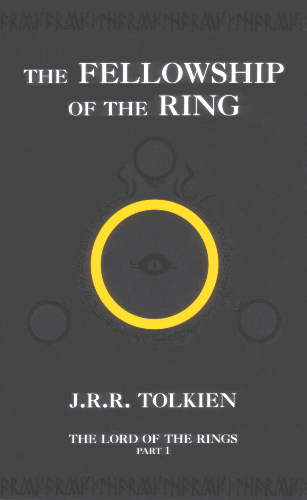
J. R. R. Tolkien: "The Fellowship of the Ring" // Discussion

~MAY CONTAIN SPOILERS~ It took me longer than I thought it would, but finally, I conquered all 531 pages of the first installment of the Lord of the Rings trilogy: The Fellowship of the Ring. I have heard it said that a fantasy fanatic reviewing Tolkien - a man widely thought of to be "The Father of Fantasy," - is the same as a Christian reviewing The Bible. I wholeheartedly agree with that statement, and so, this post will not be a review, but rather, a 'discussion' of sorts. Even if the discussion is with myself.

Not usually one for high-fantasy and hobbits, my purchase of Fellowship and The Two Towers was completely unexpected. I was in my town waiting for my dad to get back from the gym when I decided to have a lurk around the charity shops. I found these two books in one of my local Lighthouse stores and something came over me; my best friend Jayson is addicted to all things LOTR and so I think he may have rubbed off on me a little. Sadly, a copy of the third book, The Return of the King, wasn't available - but I figured I could pick that one up from the library, which I did the very next week. Anyway, at the time I had two great books with Tolkien's own illustrative designs on the cover, even if the copies themselves are a bit weathered. After all, they've been in circulation since 1999.


Even though I, myself, haven't seen the movies in 10 years and hadn't read any of the books before this week, I'm assuming that you, like me, have at least some understanding of the storyline. However, just in case you have been living under a rock for the best part of 100 years and have not yet stumbled upon even a synopsis of The Lord of The Rings, here is the blurb from Fellowship:

"In a sleepy village in the Shire, a young hobbit is entrusted with an immense task. He must make a perilous journey across Middle-earth to the Cracks of Doom, there to destroy the Ruling Ring of Power - the only thing that prevents the Dark Lord's evil dominion."

I did really, really enjoy Fellowship. Tolkien's wondrous, rich descriptions and poems were a blessing to read. I even found myself enjoying some of the songs. The hobbits were all so child-like and endearing, and I loved the characters of Aragorn, Bilbo and Legolas from the moment they made their appearances. I did have some qualms with Gandalf though, concerning the way he's just automatically in charge. In the entirety of Fellowship we do not see any transition from an ordinary guy/wizard to a man with such a position of superiority and power - if such a transition ever existed in any of Tolkien's writings - however I understand that in one of the following books there will be a lot more characterisation when he transforms into Gandalf the White. And at times, his superiority meant the plot was a little predictable. If Gandalf said the Company would suffer no disturbances that night then the reader would not worry about disturbances and there would be none; because when on Earth would Tolkien ever write Gandalf to be unwise? What Gandalf says goes.

Another plothole I found difficult to get over was the (just slightly) underdeveloped physicality of Sauron, The Lord of the Ring. I was surfing the internet one day, researching people's opinions about LOTR, when I came across someone who wondered why there was no description of Sauron in Fellowship. I pondered it for a moment in confusion, thought back, and realised that there really was no mention of his appearance at all. I brought it up with my friend Jayson - the one who's obsessed with all things LOTR, and he said, "There's no description of Sauron's body because he's just an eye." Needless to say, I responded, as any normal teenager would after just being given this information, with simply the word, "WHAT". Now, my problem with Sauron being just a headless, bodyless, eye is that, whilst the Company are going to great lengths to avoid the Ring falling back into Sauron's hands, the irony is that he has none. My first thought was of how he could possibly use the Ring to harness any dark power if he couldn't at least slip it onto his finger first. Then Jayson explained to me that, because Sauron created the Ring, he doesn't have to touch it to harness its power. But everyone else has to touch it to harness it, so I can't think of any good reason why it should be different for Sauron... even if he is the creator. The bad guy not being able to wield the weapon properly? Yeah, that was a downside for me. At this point, anyway.

Something I was happy to learn during my research is that Tolkien was good friends with C.S. Lewis, the author of The Chronicles of Narnia. I love the works of both of these two men and the fact that they knew each other and existed in the same time period is astounding to me. I learned that Tolkien, like Lewis, was a Catholic; which I could never have imagined. Then, it clicked. Frodo being led not into temptation (using the Ring) and delivering it from evil (Sauron and the Ringwraiths)? Totally Catholic. How could I have missed that?

Despite pointing out any seemingly negative observations, I assure you that I really do love LOTR and soon I'll be starting The Two Towers, which looks slightly less threatening in length. To keep up with what I'm reading, feel free to add me on Goodreads: http://www.goodreads.com/meaghanbethany. Thank you!

Rating: ★★★★1/2

Friday, 4 July 2014

Sean Platt & David W. Wright: "Monstrous" // E-Book Review

To my surprise, my dad recently bought me a Samsung Tab 3 which I am completely in love with. I found out that my device was eligible for a free e-book download every month if I activated a Samsung Kindle account, so I went for it. From a choice of four e-books that I'd never heard of or been recommended, I decided to download 'Monstrous' by Sean Platt/David W. Wright, which seemed the most "me". Of course, there was a supernatural element to it, but also a gothic element, which I thought would help me on my A2 English Literature course this  September... if I pass my exams.

The book is about a well-off comedian called Henry, who lives comfortably with his wife, Samantha, and their daughter Amèlie. One day their sizeable house is broken into, but it seems the only thing the attackers want is Henry's life, and his daughter's. Henry and Amèlie end up killed and in Purgatory, although separated, where Henry meets a man in white and a man in black. Instead of waiting for his judgement from God, the man in black - Boothe - persuades Henry to go back to the Earth plane as one of the undead, to seek revenge on his (and Amèlie's) killer. However, Henry is turned into a monster who feeds from violence and sorrow.

I didn't really connect with this book. Henry was just so easily persuaded by Boothe and Randall (the men in white and black), forever jostling with his alliance to one or the the other, that by the end it was completely unconvincing. Noone can be that indecisive. Also, there were a lot of profanities, which wouldn't normally bother me, but there were so many that it just seemed forced and cheesy. One thing I did like about the book was that for a long while I was never really sure about who was the bad guy out of Randall and Boothe. There's a massive plot twist at the end of the book, which I also liked, even though it was sad enough to be sickening.

To keep up with what I'm reading, visit my Goodreads page here: www.goodreads.com/meaghanbethany

Tuesday, 24 June 2014

Tim Weaver: "Vanished" (David Raker #3) // Review

"For millions of Londoners, the morning of 16th December is just like any other. But not for Sam Wren. An hour after leaving home, he gets on to a Tube train - and never gets off again. No eyewitnesses. No trace of him on security cameras. Six months later, he's still missing. Sam's wife hires David Raker to track him down, but in this case the secrets go deeper than anyone imagined. For, as Raker starts to suspect that even the police are lying to him, someone is watching."

Vanished, the third book in Tim Weaver's David Raker series, was given to me one Christmas by my mum, who (bless her) doesn't really know much about my reading taste other than, well, I like books. So, after unwrapping the book from the paper and having a glance at the blurb, it laid on my shelf - an anomaly - for some time. One day, I decided to force myself to read it, and, to my surprise, found myself enjoying it. Now I'm a little bit more grateful that my mum doesn't really know what to buy me, because it means I end up with books that I'd never have read otherwise. David Raker is an ex-journalist turned private detective; a man who has lost his own wife to cancer, dedicated to finding the missing. But it all comes at a cost. Sam is a man many believed to have been squeaky clean, but could he have been wrapped up in something much darker than anyone expected? As Raker hunts him down and gets deeper and deeper into the case, the lines become distorted until soon enough, Raker may be hunting a murderer. 

Something I love about this book is that it keeps you constantly guessing - you desperately want to know how Sam managed to get off the train unseen, why he left, and where he is now. Unfortunately for us, Weaver is a master of pacing and misdirection; which means that most of the second half of the novel isn't much about Sam at all, but about those that Raker suspects drove him away. Honestly, I can't say much about the plot without revealing something important that you shouldn't know; which just shows you how closely interwoven the story is. It leads you everywhere, to people and places you'd never expect. I really, really, enjoyed it, even though I'd never in my wildest dreams have picked up a detective/mystery/crime novel before this week. I hadn't even read the previous books in the series, although that didn't turn out to be much of a problem. 

I would definitely recommend this to anyone who is hesitant about getting into crime novels because, although you can play detective, you don't have to be chief of police to understand what's going on in the novel - though it's professional, it's not at all difficult for the Average Joe to interpret. Vanished is an awesome starting point for anyone who's unsure. But, be warned, the action goes on until the very last page...

Rating: ★★★★ 1/2
Great read, the only thing it really lacks is star quality and hype.


Sunday, 22 June 2014

Ned Vizzini: "It's Kind of a Funny Story" // Review

~~~CONTAINS SPOILERS~~~

I was introduced to this book by my friend Jack (whose blog you can find HERE) some time ago when I was looking for a book from Waterstones. There was only one copy left in stock and it was a bit battered but, after considering a couple of other book suggestions, I decided Vizzini's book was most different from what I usually read. Predominantly it's about learning to live with depression, and finding your 'Anchor'. It's Kind of a Funny Story is as truly inspirational for sufferers as influential in changing the mindset of parents with depressed children and teenagers.

Something I really admire about Vizzini's writing in this novel is the simple terminology he is able to apply to such massively complex emotional states, which other people would no doubt struggle to describe. For example, an 'Anchor' is/can be something you enjoy which keeps you stable and grounded amidst your emotional turmoil. In contrast, 'Tentacles' was the name given to all the chores you have to endure which can worsen your mental health. (Simple, yet genius.) Craig's depression begins when he's accepted into a prestigious school, where he finds that all the classes and homework (his Tentacles) are just too much, and, after discontinuing his own medication, begins to sink even lower until he hits rock bottom; contemplating suicide. At the start of the novel I empathised and identified with Craig, although I didn't really connect with him because the reader only ever sees him when he's miserable or horny.

You do begin to connect with him, however, when his almost-suicide-attempt leads to him being admitted onto a psychiatric ward, where his personality begins to shine through thanks to all the eccentric and similarly troubled patients he meets there. Craig becomes likeable, or at least, more so. This point is definitely the best in the book; it's so uplifting to read about him finding friends and his love of art, which is enough to make him change his lifestyle and realise that his school was the problem all along. Importantly, It's Kind of a Funny Story was a semi-autobiographical novel detailing Vizzini's own teenage experience during a short stay in a psychiatric ward. At the end of the novel, Craig, who closely resembles Vizzini in many ways, certainly finds some kind of peace of mind. The same was true for Vizzini after his stay, up until his unexpected suicide in December 2013. I knew about the author's death prior to reading the book, so as well as being Craig's story, it also became Ned's. It was a saddening, bittersweet tale of a life salvaged and lost again, from my point of view.

What this book has done for awareness and understanding of depression is unparalleled. It also taught me about the importance of not making other people too important - not making a boyfriend/girlfriend/friend/family member your Anchor - which is something I really value. People are spontaneous and unpredictable; hobbies are stable and familiar. Rely on yourself more, guys. I can only wish that Vizzini was still around to see it touch the hearts and minds of parents and teenagers like me. RIP, Ned.

Rating: ★★★★☆


Friday, 13 June 2014

Kazuo Ishiguro: "Never Let Me Go" // Review

"As children, Ruth, Kathy and Tommy spend their childhood at a seemingly idyllic English boarding school. As they grow into young adults, they find that they have to come to terms with the strength of the love they feel for each other, while preparing themselves for the haunting reality that awaits them. Never Let Me Go is an unforgettable story of love, friendship and the fragility of life."


Whilst Never Let Me Go is sometimes ethically intriguing, it's also rather dull. Like the film, it was slow, quiet and hard to get into. I'll be honest, there were occasions when I really had to force myself to pick the book up and continue reading - yet despite my efforts I feel like I got nothing out of it. At times there wasn't as much dialogue as I'd like, especially between Kathy and Tommy; whose relationship deserved to be established and explored in more depth than it ever was in the book. This is probably why the film adaption of the novel takes the edge for me, considering it leads you to believe Kathy and Tommy spent a lot more time together than they were actually written to have. One thing that does annoy me about the film though is that Kathy is made to appear a virginal, shy type. In the book she has many fleeting relationships, which, again, are never explored in any detail but are vital to mention when it comes to her characterisation.

Although the blurb makes this big thing about "an unforgettable story of love", I'd argue against it. If Tommy had never said to Kath, "We loved each other all our lives," then you may not have realised that was ever the case. Even when they (SPOILER ALERT!) become a couple, there's never a soft caress; Tommy never pushes her hair behind her ear... you know, all the things you'd expect from two people who have, supposedly, been longing to be together all their lives. Even then, it's just "sometimes, we had sex." And, yes, that is an exact quote, which I believe is said more than once. I shouldn't judge him seeing as I've only read one of his books, but as far as I can gather, Ishiguro's talent does not extend to creating complex loving relationships. It's all very minimalist and he doesn't go too far in his descriptions. In fact, I have never seen such disparity when it comes to describing characters and what they look like, either! In his defence, though, I'm not sure if his lack of description of the clones was to emphasise their unimportance in the eyes of the humans.

One clever thing about the novel though, being dystopian, is that it really does make you think - even without posing a single question. You do consider what you'd like the fate of the clones to be. On the other hand, it is very forgettable. Nothing really happens, and nothing ever shocked me - although I suppose I had some sort of idea about the ending because I'd already watched the film. Nonetheless, if I saw someone about to read it, I'd direct them to put it back where they got it. That may seem a bit harsh, but I'm a big believer in that books are supposed to make you feel. Ishiguro just doesn't do it for me.


To keep up with what books I'm reading, visit my Goodreads page at: https://www.goodreads.com/user/show/32076954-meaghan

Monday, 27 May 2013

Meg Cabot: "Underworld"

Underworld, written by teen author Meg Cabot, sequel to Abandon, comes as the first book I have read in months. And as I finally have some time to spare (thank you, study leave), I thought I might as well review it too.


At the end of the last installment, young seventeen year old Pierce is whisked away from her home in Isla Huesos to the Underworld by none other than the modern-day Hades himself, John Hayden. 'Underworld' focuses mainly on the growing relationship between the two characters, and around Pierce's inability to decide between home, or living with Death. With her cousin Alex in danger, Pierce is able to convince John to take her back to the Earth plane for one night only, where they attempt to track down and maybe destroy the Furies.
I was really excited to purchase this book (£7.99 from WHSmith stores or £5.99 online http://www.whsmith.co.uk/Products/Abandon-Underworld-Unabridged+Paperback+9780330453882) as I'd really enjoyed the first in the trilogy. But I felt that Underworld, with its 309 pages - much less than the first book - didn't live up to my expectations. Whilst I enjoyed the similarity between John and Pierce to Hades and Persephone, I wasn't really thrilled by anything that was supposed to be exciting. Although it was a good read and I continued to turn the pages, I think it was just my love for the first book that kept me going. I was never on the edge of my seat, and I didn't believe the explanation Meg had given for John becoming Lord of the Underword (which still hasn't been properly explained in the book), and so I couldn't get lost in it. I suppose I felt it lacked emotion and so I couldn't get attached to the characters this time around. I felt it was just a back story for whatever is going to happen in the third book of the trilogy. I wouldn't recommend this book if you haven't read the first or aren't going to read the third. 'Awaken' will be hitting book stores soon - and I do suggest you read that. I have faith in Meg to pull this one out of the bag.
Another problem I had with the book itself is that, on the back, the publishers or the printers are supposed to print "only for teen readers" or the like, if there is any sexual content within the pages. *SPOILER* Although the short sex scene towards the end of the book is hidden quite cleverly (Cabot is quite reserved in her detail of the event) I do feel that it was inappropriate not to have the words "only for teen readers" on the back. If you read the scene, you'll understand what I mean. I asked my boyfriend, who's sixteen, to read the scene and he shares my opinion. But he did giggle a lot.